
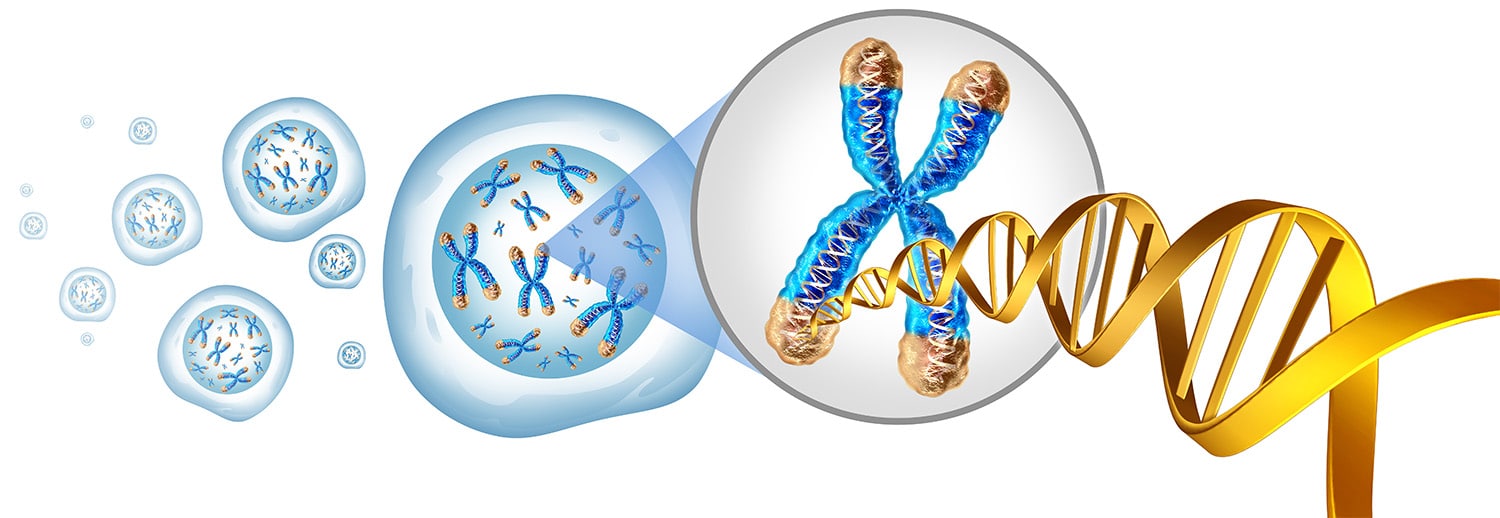
Longitudinal studies incorporating DNA methylation profiles can provide insights into biological ageing, environmental exposures, and disease mechanisms. A methylation signal is quantitative and can be affected by sample collection, processing and storage. This blog introduces DNA methylation and gives examples of how Isohelix DNA extraction, stabilisation and storage products are being used in methylation studies to investigate ageing.
The blog covers:
- What is DNA Methylation?
- Epigenetic Clocks: The Link between DNA Methylation and Ageing
- How to measure DNA Methylation
- Platforms for Methylated DNA Analysis
- Sample Collection for DNA Methylation Analysis
- Isohelix Products for Methylation Sample Collection, Stabilization and Extraction
- Example Studies using Isohelix Products for Aging Research
What is DNA Methylation?
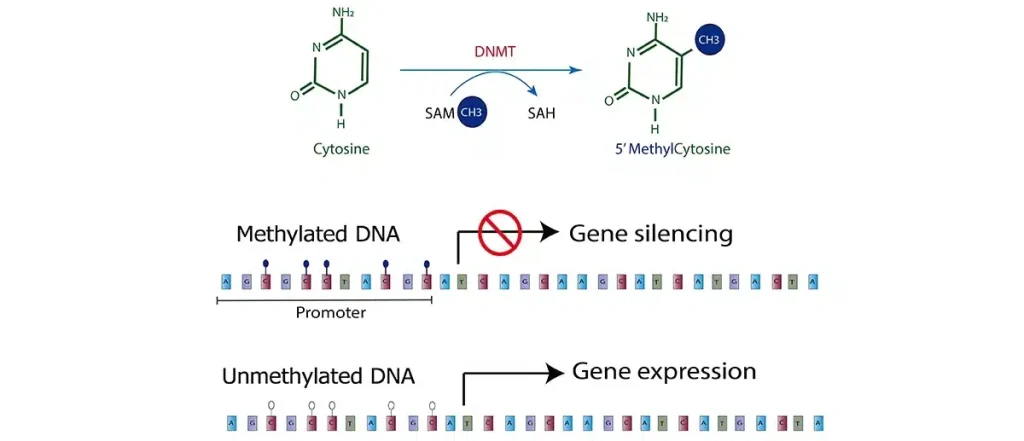
DNA is described as “methylated” when a methyl group is enzymatically added to the fifth carbon of a cytosine base, producing 5-methylcytosine. In mammalian somatic cells, methylation occurs at CpG dinucleotides, where a cytosine is followed by a guanine on the same strand.
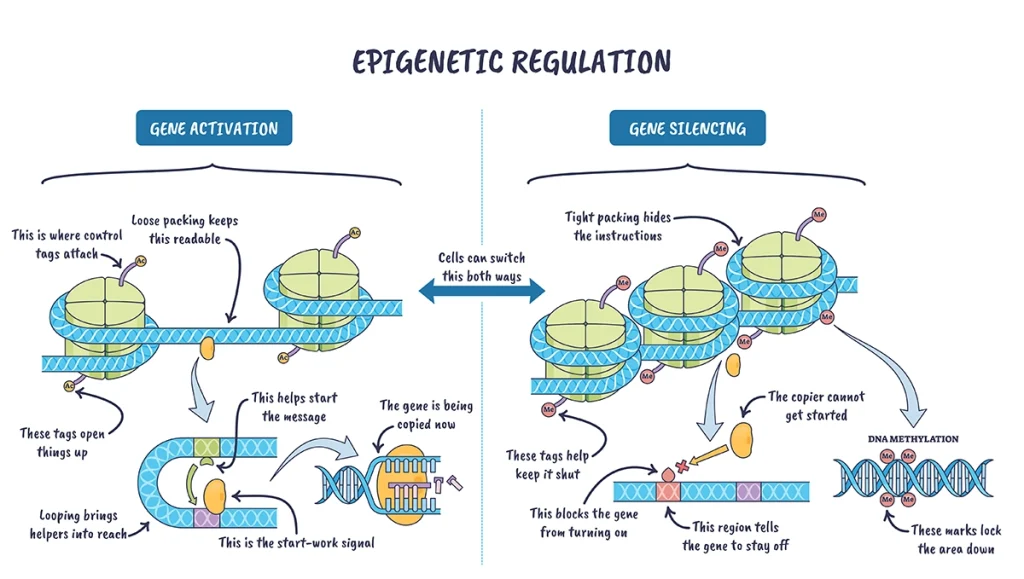
CpG sites are often clustered into regions known as CpG islands, which are usually unmethylated and frequently found at gene promoters. Methylation of promoter CpG islands typically represses transcription, and in mammals is associated with several key processes including genomic imprinting, X-chromosome inactivation, and the repression of transposable elements.
Epigenetic Clocks: The link between DNA Methylation and Ageing
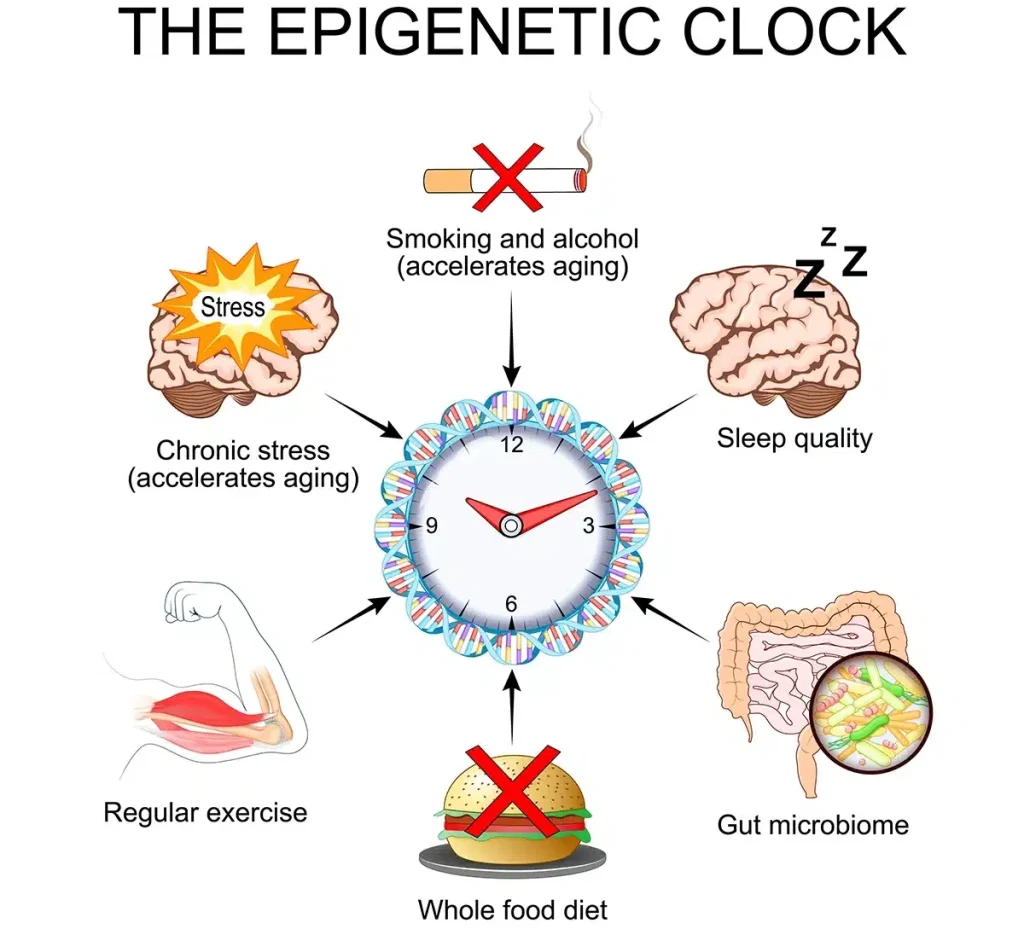
DNA Methylation patterns shift predictably with age. The genome tends to lose methylation globally, while individual CpG islands gain it. The first epigenetic age estimation method, or “epigenetic clock” that works with high accuracy across almost all human tissues and cell types was published by Steve Horvath in 2013.[i]
There is now a large body of literature available describing sets of CpGs whose DNA methylation levels correlate with age.
Epigenetic clocks are being used to answer a range of biological questions related to aging, for example tracking recovery in elite athletes, measuring whether dietary interventions have shifted biological aging trajectories, and exploring why some people carrying risk variants for diseases such as dementia, age differently from others.
How to measure DNA Methylation
Methylation cannot be read directly using standard next generation sequencing methods, as the addition of a methyl group does not alter the underlying nucleotide sequence.
Three techniques for preparing DNA for methylation analysis are summarized below:
Sodium Bisulphite Conversion
Treating a DNA sample with sodium bisulphite deaminates unmethylated cytosines to uracil (which are then read as thymine during DNA sequencing) while leaving 5-methylcytosines intact[ii]. Sodium bisulphite treatment has been widely used, but is a harsh treatment causing DNA degradation and meaning that input requirements are typically in the hundreds of nanograms of high-purity DNA.
Platforms for DNA Methylation Analysis
After bisulphite conversion, there are several readout platforms that can be used:
Methylation arrays: Most published epigenetic clocks are trained on array data. Often using the Illumina Infinium platform. The Infinium MethylationEPIC v2.0 Kit[iii] includes ~ 930,000 CpG sites from the methylome.
Whole-genome bisulphite sequencing: It is possible to sequence the whole genome after treatment with sodium bisulphite, but complete coverage is very expensive and requires a large amount of input DNA.
Reduced-representation and capture-based sequencing: Enriching for CpG-dense or otherwise informative regions allows a focus on specific regions of interest, and reduces sequencing costs.
Targeted assays eg Pyrosequencing, methylation-specific PCR, interrogate a handful of loci with high precision and low cost and are most commonly used when investigating small numbers of loci or candidate-genes.
Alternatives to Bisulphite Conversion for DNA Methylation Analysis
Several alternatives to bisulphite conversion have been developed:
Enzymatic Conversion
In recent years, enzymatic conversion methods such as EM-seq[iv] have emerged as a gentler alternative to bisulphite conversion. EM-seq does not damage DNA in the same way as bisulphite sequencing and gives better genome coverage, CpGs detected, and genomic features identified.
Enrichment-Based Assays
Affinity-based enrichment assays, such as Methylated DNA immunoprecipitation (MeDIP)[v], use immunoprecipitation with a monoclonal antibody to enrich the DNA sample. PCR or array-based analysis of enriched methylated DNA can determine the methylation state of individual regions.
Third Generation Sequencing Platforms
Long read platforms such as Oxford Nanopore[vi][vii] and PacBio[viii] do not require a bisulphite conversion step, but bypass PCR amplification to sequence native DNA or RNA in real time. These technologies detect base modifications directly, but require high-molecular-weight DNA samples.
Sample Collection for DNA Methylation Analysis
A methylation signal is quantitative, often tissue-specific, and can be affected by everything that happens to a sample from when it is taken, to when it is analysed. Blood remains the reference tissue for many published clocks. However, blood collection requires a phlebotomist, a clinic visit and usually a cold chain, and those constraints often limit what a study can achieve.
Non-invasive alternatives, such as sampling using buccal swabs and saliva, have therefore become central to the field. Social and behavioural science research commonly collect saliva or cheek-swab DNA. Both can be self-collected, posted, and donated repeatedly by the same participant, enabling longitudinal studies such as those looking at ageing. Buccal tissue has its own dedicated clocks, for example CheekAge[ix], and is widely used in research where blood draws are impractical.
Isohelix Products for Methylation Sample Collection, Stabilization and Extraction
Isohelix sample collection and isolation products have been designed by our team of scientists and engineers, to generate high-qualityresults.
Several key features of Isohelix products make them ideal for DNA methylation analysis:
| Feature | Why it matters for methylation analysis |
| Immediate stabilisation at the point of collection | Bisulphite conversion is a harsh treatment and far less forgiving of degraded input than PCR. Isohelix stabilisation buffers fix nucleic acids at the moment of donation, preventing sample degradation during transit. |
| Room-temperature storage for up to 60 months | Removing the cold chain lowers cost and the risk of samples degrading during storage. |
| Non-toxic chemistry | Stabilisation buffers are safe for participants to handle at home and samples can be safely posted, making remote sampling easy. |
| High-yield, high-molecular-weight DNA | Genome-wide methylation arrays need significant amounts of input DNA, at high purity. real input mass at genuine purity. Isohelix DNA Extraction kits are optimised specifically for buccal and saliva samples rather than adapted from generic protocols. |
| Scalability | Automation-friendly formats available if required for large studies. Unique sample barcoding allows for easy integration into LIMS. |
Example Studies Using Isohelix Products for Ageing Research
Isohelix products have been used in many peer-reviewed publications in epigenetics research. Below are some recent examples:
- Epigenetic Age Monitoring in Professional Soccer Players for Tracking Recovery and the Effects of Strenuous Exercise[x]
This study investigated the effects of intense physical activity on epigenetic age markers in professional soccer players. DNA methylation data was generated from 2ml saliva samples collected before and after physical activity using GeneFix Saliva DNA/RNA Collection Kits and the HumanMethylationEPIC v1.0 BeadChip. Vigorous physical activity was found to rejuvenate epigenetic clocks, with significant decreases in observed immediately after games.
- Epigenetic Signatures of individuals with differing APOE Genotypes utilising Saliva DNA Methylation and its Relation to Alzheimer’s Disease (A Data Pilot Study)[xi]
To investigate genome-wide DNA methylation differences in saliva associated with the APOE genotype, 4ml saliva samples were collected from 5,610 individuals genotyped for APOE, using GeneFix Saliva DNA/RNA Collection Kits. DNA methylation profiling was conducted using the Illumina MethylationEPIC array and cognitive self-assessments and AD diagnoses were used to explore phenotypic correlations. The authors concluded that APOE ε4 is associated with reproducible and functionally relevant DNA methylation changes in saliva.
The objective of this study was to identify predictors of epigenetic age and its association with neurodevelopmental outcomes in children born preterm. Buccal epithelial cell samples were collected from study participants, DNA was extracted using the Isohelix Buccal Prep Plus DNA isolation kits, and DNA methylation was profiled using the Infinium Methylation EPIC Bead Chip. Epigenetic age acceleration was associated with better cognitive and motor outcomes in children born preterm
- Age-associated DNA methylation loci at lncRNA genomic regions revealed by Oxford Nanopore whole-genome sequencing using four methylation callers[xiii]
In this study, whole-genome DNA methylation analysis was performed using Oxford Nanopore sequencing to analyse buccal swab samples collected using Isohelix Buccal swabs. Two independent swabs were obtained to ensure sufficient DNA quantity for downstream analysis. Analysis showed that multiple methylation sites demonstrated strong correlations with chronological age.
For a more complete list of publications featuring Isohelix products, click here
To discuss sample collection for an epigenetics or ageing study, visit www.isohelix.com or contact our technical team.
[i] Horvath, S. (2013). DNA methylation age of human tissues and cell types. Genome Biology, 14(10), R115. https://doi.org/10.1186/gb-2013-14-10-r115
[ii] Frommer, M., McDonald, L. E., Millar, D. S., Collis, C. M., Watt, F., Grigg, G. W., Molloy, P. L., & Paul, C. L. (1992). A genomic sequencing protocol that yields a positive display of 5-methylcytosine residues in individual DNA strands. Proceedings of the National Academy of Sciences U.S.A., 89(5), 1827–1831. https://doi.org/10.1073/pnas.89.5.1827
[iii] Illumina. Infinium methylation EPIC. Retrieved from https://emea.illumina.com/products/by-type/microarray-kits/infinium-methylation-epic.html
[iv] Vaisvila, R., Ponnaluri, V. K. C., Sun, Z., Langhorst, B. W., Saleh, L., Guan, S., Dai, N., Campbell, M. A., Sexton, B. S., Marks, K., Samaranayake, M., Samuelson, J. C., Church, H. E., Tamanaha, E., Corrêa, I. R., Jr., Pradhan, S., Dimalanta, E. T., Evans, T. C., Jr., Williams, L., & Davis, T. B. (2021). Enzymatic methyl sequencing detects DNA methylation at single-base resolution from picograms of DNA. Genome Research, 31(7), 1280–1289. https://doi.org/10.1101/gr.266551.120
[v] Mohn, F., Weber, M., Schübeler, D., & Roloff, T. C. (2009). Methylated DNA immunoprecipitation (MeDIP). In Methods in Molecular Biology (Vol. 507, pp. 55–64). https://doi.org/10.1007/978-1-59745-522-0_5
[vi] Oxford Nanopore Technologies. Epigenetics and methylation analysis. Retrieved from https://nanoporetech.com/applications/investigations/epigenetics-and-methylation-analysis
[vii] Oxford Nanopore Technologies. Human Variation Sequencing from Saliva Samples. Retrieved from https://nanoporetech.com/document/human-variation-from-saliva-samples
[viii] PacBio. Epigenetics. Retrieved from https://www.pacb.com/products-and-services/applications/epigenetics/
[ix] Shokhirev, M. N., Torosin, N. S., Kramer, D. J., et al. (2024). CheekAge: A next-generation buccal epigenetic aging clock associated with lifestyle and health. GeroScience, 46, 3429–3443. https://doi.org/10.1007/s11357-024-01094-3
[x] Brooke, R. T., Kocher, T., Zauner, R., Gordevicius, J., Milčiūtė, M., Nowakowski, M., Haser, C., Blobel, T., Sieland, J., Langhoff, D., Banzer, W., Horvath, S., & Pfab, F. (2025). Epigenetic age monitoring in professional soccer players for tracking recovery and the effects of strenuous exercise. Aging Cell, 24, e70182. https://doi.org/10.1111/acel.70182
[xi] Collins, C., Puras, A., & Brown, J. (2025). Epigenetic signatures of individuals with differing APOE genotypes utilising saliva DNA methylation and its relation to Alzheimer’s disease (A data pilot study). Available at SSRN: https://ssrn.com/abstract=5278004
[xii] Christensen, R., et al. (2025). Epigenetic age and neurodevelopmental outcomes in children born preterm. Genetics in Medicine Open, 4 https://www.sciencedirect.com/science/article/pii/S2949774425015183
[xiii] Tiras, F., Cole, C., & Gray, A. (2026). Age-associated DNA methylation loci at lncRNA genomic regions revealed by Oxford Nanopore whole-genome sequencing using four methylation callers. Forensic Science International: Genetics, 84, 103502. https://doi.org/10.1016/j.fsigen.2026.103502


 Email Us
 Call Us