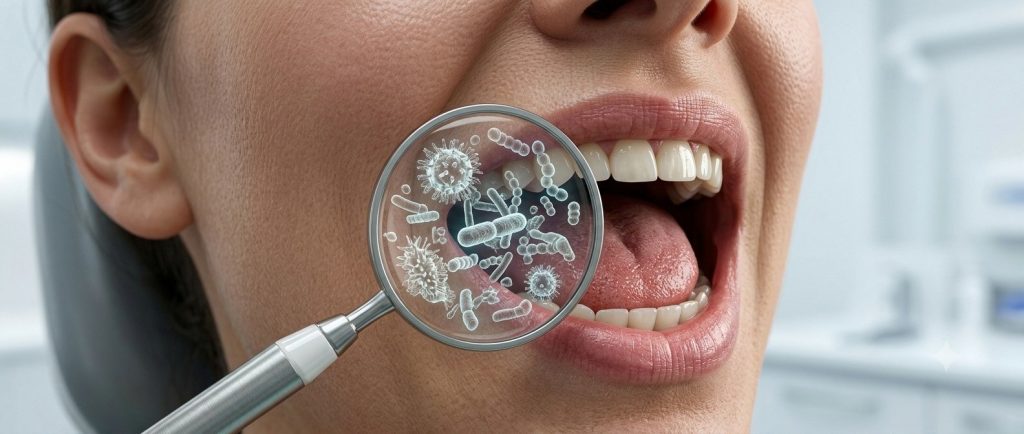
Isohelix products have been used in a number of peer-reviewed papers on the oral microbiome.
In this blog, we discuss:
- The importance of the oral microbiome
- Sampling the oral microbiome
- How to sample the oral microbiome using whole saliva
- How to sample the oral microbiome using swabs
Introduction
The oral cavity is the second largest and most diverse microbial community in the body after the gut, and variations in the oral microbiome have been linked to numerous disorders (for a recent review see Tan et al (2024)).[i] How a microbiome sample is collected and stored can change the observed diversity.
Sampling the oral microbiome
Several studies have shown differences in the observed oral microbiome, depending on the sampling method. For example, in 2022 Lee et al[ii] used real time PCR assays to determine ribosomal DNA (rDNA) copy numbers of 10 major oral microbes, comparing seven saliva and plaque collection methods. The study found that the microbial community found in saliva samples differs from that found in plaque.
A second 2022 study by Kaan et al[iii], found that tooth-associated taxa were underrepresented in saliva sampled using swabs. Spit saliva contains micro-organisms from multiple intra-oral surfaces, while swabbed saliva mainly contains micro-organisms from the sublingual mucosa.
If you are studying a particular niche within the oral cavity, for example the tongue, buccal mucosa or subgingival plaque, then use a site-targeted swab or curette. Smaller amounts of saliva can be sampled using swabs, but to sample the whole community within the oral cavity, saliva collected in a tube will give the greatest microbial diversity.
How to sample the oral microbiome using whole saliva
Saliva sampling is a straightforward and non-invasive method of collecting oral microbiome samples.
Isohelix have developed a kit specifically for collecting saliva for microbiomics, the GeneFiX™ Saliva Microbiome DNA Collector (MFX). The saliva collection device in the kit is pre-filled with stabilization buffer that stabilizes the microbial community from the moment of collection, for more than 12 months.
- Ambient Storage – No Expensive Storage or Transport
- Instant Stabilization – Provides a Snapshot of the Saliva Microbiome at collection
- No Trace DNA Contamination – Reliable Results
- Compatible with Most Downstream Chemistries
- Non-Toxic – Non-Hazardous – Easy to Use
- Unique Funnel Design Prevents Spillages or Buffer Flow Back
- Suitable for Field, Home Use & Clinic-Based Sampling
- Collection Tube Specified to 95kPa for Leak Proof Mailing
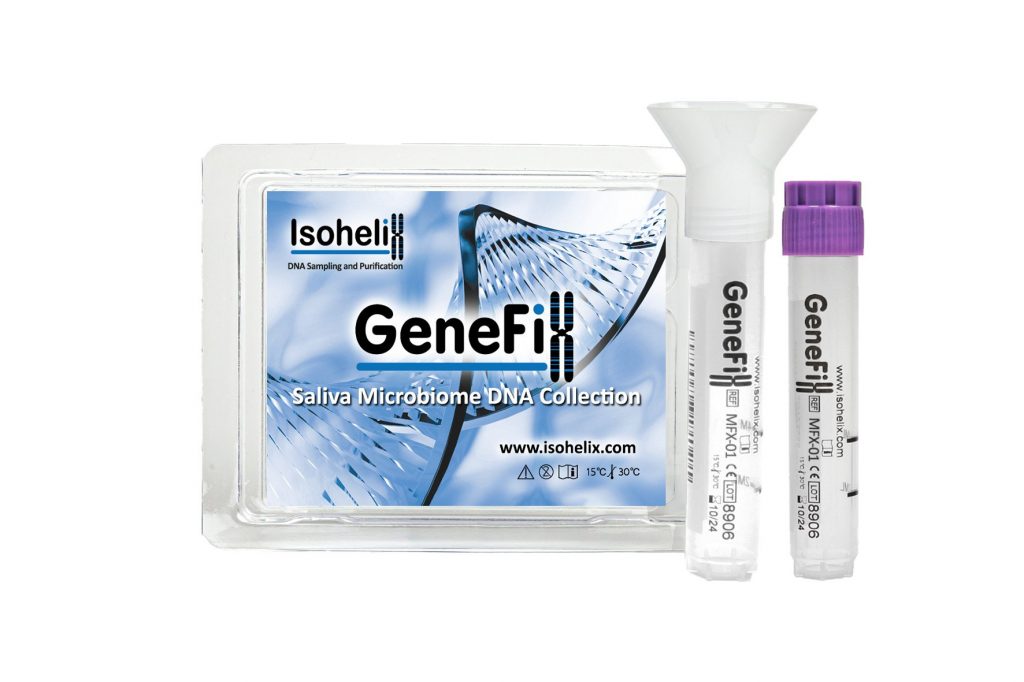
The kit is simple and easy to use – the donor simply spits into a specially designed collection funnel, and the saliva passes into a collection tube pre-filled with stabilization buffer. For the complete instructions for use, click here.
Several peer reviewed publications have used Isohelix GeneFiX™ Saliva Microbiome DNA Collector (MFX) kits to study the oral microbiome – including the following:
- Bhanu, P., Buchke, S., Hemandhar-Kumar, N. et al. Comparative metagenomic analysis of the oral microbiome in COVID-19 patients and healthy individuals. Sci Rep 15, 10303 (2025). https://doi.org/10.1038/s41598-024-81864-3
- “1ml saliva samples were collected using the GeneFiX™ Saliva Microbiome DNA Collector Kit and shipped at room temperature for RNA extraction. Long read whole genome sequencing of cDNA generated from the samples was performed to investigate microbial shifts associated with COVID-19.”
- Ostrowska, M.; Nowosad, K.; Mikoluc, B.; Szczerba, H.; Komon-Janczara, E. Changes in the Gut and Oral Microbiome in Children with Phenylketonuria in the Context of Dietary Restrictions—A Preliminary Study. Nutrients 2024, 16, 3915. https://doi.org/10.3390/nu16223915
- “Saliva was collected into GeneFix™ Saliva Microbiome DNA Collector tubes and 16S rRNA gene sequencing was used to analyse microbial communities.”
- Alyousef, Y.M., Piotrowski, S., Alonaizan, F.A. et al. Oral microbiota analyses of paediatric Saudi population reveals signatures of dental caries. BMC Oral Health 23, 935 (2023). https://doi.org/10.1186/s12903-023-03448-3[RO4]
- “Saliva was collected into GeneFix™ Saliva Microbiome DNA Collector tubes and bacterial DNA was extracted using the GeneFix Saliva DNA Extraction Kit. Oral microbiota composition and abundance were identified using 16 S rRNA sequencing .”
How to sample the oral microbiome using swabs
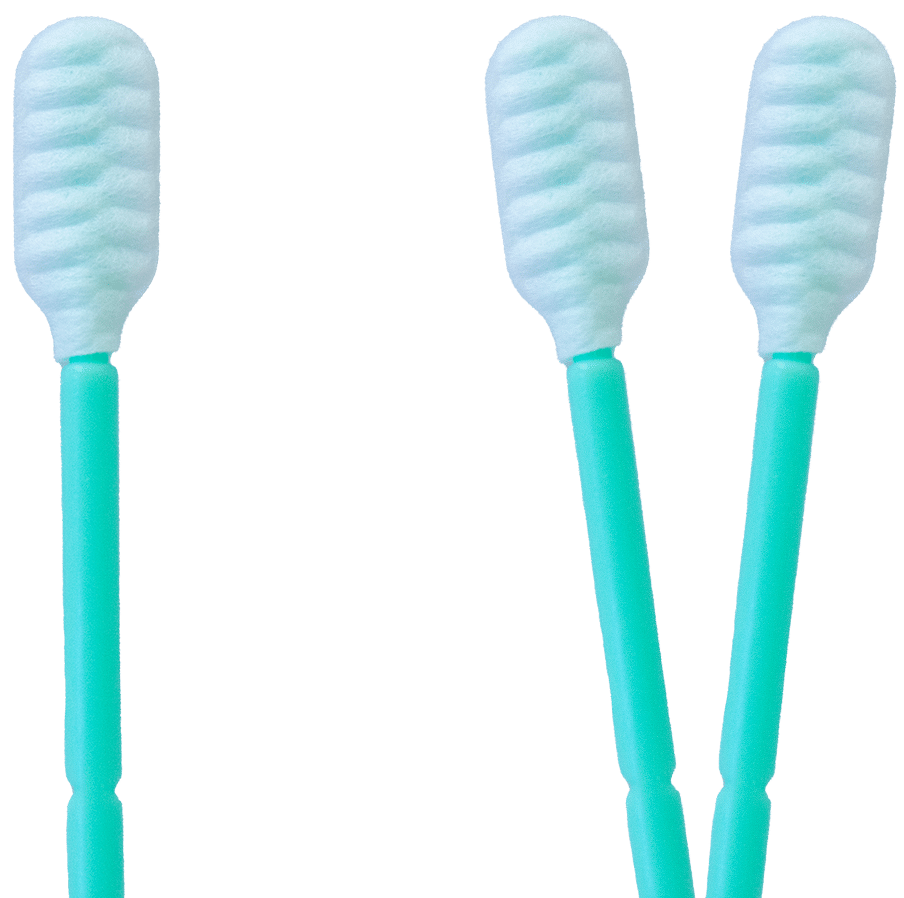
For teams targeting a specific oral surface rather than pooled saliva, such as the tongue or gums, the Isohelix SK Swab range can be paired with BuccalFix stabilisation chemistry for best results. .
To discuss which sampling method would be best for your oral microbiome study, contact us at info@isohelix.com.
[i] Tian S, Ding T, Li H. Oral microbiome in human health and diseases. mLife. 2024;3:367-383. https://doi.org/10.1002/mlf2.12136
[ii] Lee Y, Hong J, Lee G. Composition and Diversity of Salivary Microbiome Affected by Sample Collection Method. JOMP 2022;47:10-26. https://doi.org/10.14476/jomp.2022.47.1.10
[iii] Kaan, A. M., Brandt, B. W., Buijs, M. J., Crielaard, W., Keijser, B. J., & Zaura, E. (2022). Comparability of microbiota of swabbed and spit saliva. European journal of oral sciences, 130 (2), e12858. https://doi.org/10.1111/eos.12858




 Email Us
 Call Us